


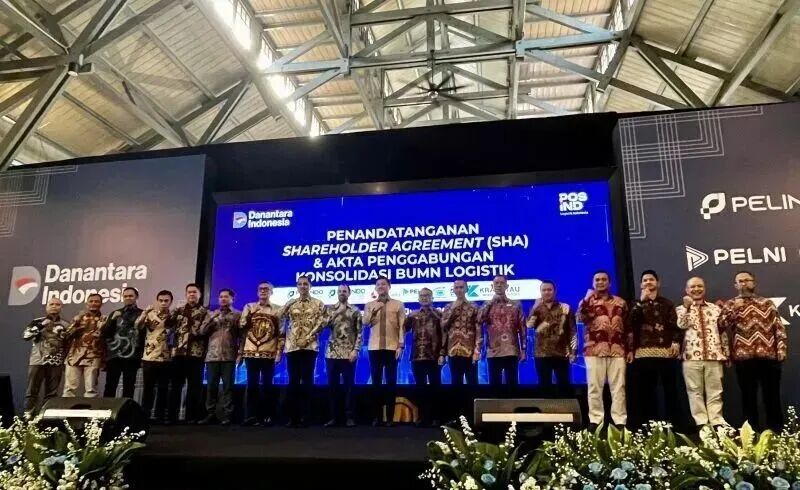
The Indonesian government has officially announced the merger of seven state-owned logistics enterprises into a single unified legal entity. This consolidation covers multiple segments including sea freight, warehousing, port operations, and land transportation, marking a major continuation of state-owned enterprise (SOE) reform initiated during the Jokowi administration.
The newly formed entity will control Indonesia’s largest integrated logistics asset network, including port terminals, bonded warehouses, industrial logistics parks, and nationwide transport fleets.
1. Background: Indonesia’s High Logistics Cost Problem
This reform is driven by a long-standing structural issue in Indonesia’s economy:
Logistics cost accounts for over 23% of GDP, significantly higher than neighboring Southeast Asian countries
Fragmented logistics operators lead to duplicated infrastructure and inefficient routing
Lack of unified coordination across ports, warehousing, and inland transportation
By consolidating seven BUMN logistics companies, the government aims to:
Eliminate internal competition
Optimize shipping route planning
Centralize warehouse allocation and distribution systems
Strengthen multimodal transport integration
This reflects a broader supply-side structural reform of Indonesia’s logistics infrastructure, with long-term implications for both domestic and cross-border trade.
2. Short-Term Impact: Transition Frictions in the Logistics System
In the short term, the integration process may create operational instability across the logistics chain.
Potential disruptions include:
System integration delays between subsidiaries
Customer handover and contract restructuring issues
Temporary fluctuations in customs clearance efficiency and delivery stability
For exporters and importers relying on Indonesia freight forwarding networks or Indonesia DDP logistics solutions, these transitions may introduce uncertainty in shipment timelines.
Risk mitigation recommendation:
Cross-border sellers are advised to route at least 30% of orders through alternative third-party logistics providers to hedge against potential service disruptions during the integration period.
3. Mid-to-Long-Term Impact: Efficiency Gains and Cost Optimization
Despite short-term volatility, the long-term outlook is structurally positive.
The unified logistics entity is expected to:
Improve trunk route transportation efficiency
Reduce warehousing and transshipment costs
Strengthen nationwide logistics coordination
This will particularly benefit:
B2B bulk trade flows
Fulfillment models similar to FBA warehousing systems
Cross-border sellers using Indonesia DDP shipping structures
As logistics consolidation matures, Indonesia may see a gradual reduction in systemic inefficiencies that have historically inflated shipping costs.
4. Strategic Implications for Chinese Cross-Border Enterprises
For Chinese exporters, e-commerce sellers, and logistics providers, this reform signals both opportunity and restructuring pressure.
1. Increased Importance of Partner Selection
Companies operating in Indonesia should closely monitor:
Third-party carrier procurement policies of the new SOE logistics group
Opportunities to become subcontracted operators or strategic partners
2. Market Entry Barrier Reshaping
Unified state logistics may:
Raise compliance standards for freight forwarding operations
Centralize customs and distribution control
Favor integrated logistics partners with strong local infrastructure
3. Opportunity for Structured Logistics Integration
Enterprises with strong capabilities in:
Indonesia DDP logistics solutions
End-to-end freight forwarding networks
Warehousing + customs + last-mile integration
will be better positioned to align with the new system.