


Recently, Indonesia's National Agency of Drug and Food Control (BPOM), together with local regulatory authorities,
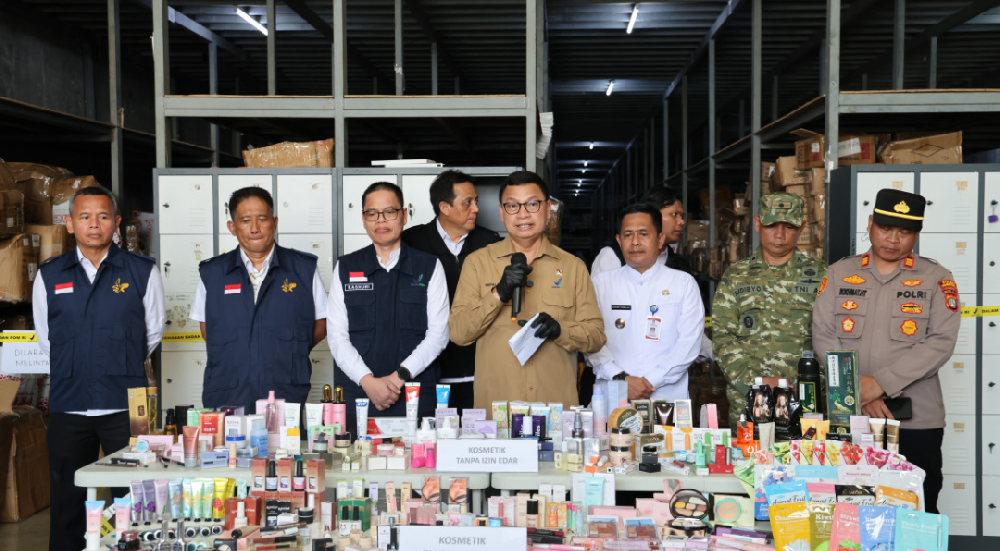
conducted a special enforcement operation in Tangerang Regency, Banten Province, uncovering a warehouse suspected of storing illegally imported cosmetics.
Authorities seized more than 2.08 million cosmetic products, with an estimated value of IDR 27.6 billion.
The case has once again highlighted the growing importance of compliance in Indonesia's cosmetics import sector,
particularly for businesses relying on Indonesia Double Clearance services and Indonesian Freight Forwarders to enter the Indonesian market.
Majority of Products Originated from China
According to BPOM's official statement,
most of the seized products originated from China and had not obtained the required Indonesian import permits or market authorization.
Among the confiscated goods:
Approximately 890 product categories
Around 1.81 million cosmetic units
had not received official distribution permits from BPOM and therefore did not meet Indonesia's legal requirements for sale and distribution.
Investigators revealed that the products mainly consisted of makeup and beauty products imported from China through unauthorized channels.
Products Entered Indonesia Through Non-Compliant Import Routes
Authorities stated that the cosmetics did not enter Indonesia through standard import procedures.
Further investigations found that the products were transported through non-compliant logistics channels and unauthorized freight forwarding arrangements.
The shipments allegedly lacked:
Official import approvals
Customs declaration documents
Distribution permits
Tax and duty compliance records
As a result, the imports are suspected of bypassing customs supervision and avoiding applicable import duties and taxes.
This case serves as a strong reminder that choosing compliant Indonesian Freight Forwarders and
legally operated Indonesia Double Clearance services is critical when importing regulated products into Indonesia.
Illegal Products Sold Through Local E-commerce Platforms
Enforcement officers also discovered that the company intentionally stored the products in a relatively concealed warehouse location.
The cosmetics were reportedly being sold through multiple Indonesian e-commerce platforms,
allowing a significant number of products to enter the local market before authorities intervened.
As Indonesia's e-commerce sector continues to expand rapidly, regulators are increasing their scrutiny of imported products sold online.
Businesses importing cosmetics, food, supplements, and personal care products are facing increasingly strict compliance requirements.
Potential Health Risks Raise Serious Concerns
BPOM emphasized that the confiscated products had not undergone official safety verification procedures.
Because the products lacked proper approval and registration, authorities were unable to verify critical safety factors such as:
Raw material sources
Product formulations
Microbiological safety standards
Heavy metal content
Manufacturing compliance
Regulators warned that long-term use of unregistered cosmetic products may expose consumers to various health risks, including:
Skin allergies
Inflammatory reactions
Irritation and sensitivity
Heavy metal accumulation
For this reason, the operation was not only aimed at combating illegal imports but also at protecting public health and consumer rights.
Compliance Is Becoming More Important Than Ever
Indonesia has continued strengthening its regulatory framework for imported consumer goods, particularly in sectors such as:
Cosmetics
Food and beverages
Health supplements
Medical devices
Electronics
Products entering Indonesia often require additional certifications and approvals, including:
BPOM registration
SNI certification
Import licenses
Customs declarations
Product-specific compliance documentation
Failure to comply with these requirements can result in:
Cargo detention
Product confiscation
Financial penalties
Business license restrictions
For exporters and importers, working with experienced Indonesian Freight Forwarders and utilizing compliant Indonesia Double Clearance
solutions can significantly reduce customs risks and ensure smoother market entry.
Conclusion
The seizure of more than 2 million cosmetic products worth IDR 27.6 billion demonstrates Indonesia's increasingly strict stance on illegal imports and product compliance.
As regulatory enforcement continues to intensify, businesses exporting to Indonesia must prioritize legal import procedures,
accurate customs declarations, and proper product registration.
Whether importing cosmetics, consumer goods, electronics, or other regulated products, partnering with reliable
Indonesian Freight Forwarders and compliant Indonesia Double Clearance service providers is becoming essential for long-term success in the Indonesian market.
For companies looking to expand in Indonesia, compliance is no longer optional—it is a fundamental requirement for sustainable growth.