


Description of Goods
The Indonesian customs believes that detailed information such as the model number
and the name of the manufacturer of each product must be indicated in the product description column.
However, other types of origin certificates issued by China rarely have such requirements.
Under the regulations of the Indonesian customs, the product name must be detailed. During the declaration process, each item should
be listed precisely according to the items on the packing list and invoice provided to the foreign customers for customs clearance,
and the manufacturer's name should also be entered in the description of the goods section.
Since other types of origin certificates issued by our country do not have such requirements,
it causes many inconveniences for enterprises when applying for visas.
Therefore, when exporting products to Indonesia, we must ensure that the product names are detailed and strictly follow the requirements for declaration.
Transportation route
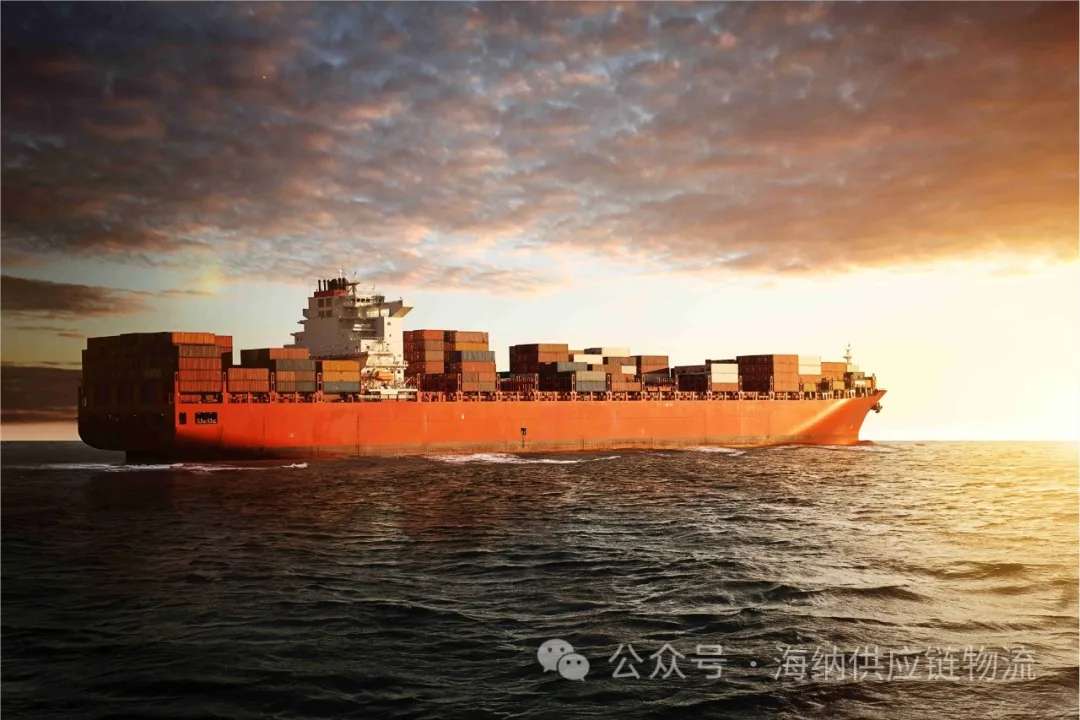
Before shipping the goods, it is necessary to verify the transportation route to avoid the situation where the goods cannot clear customs.
During the freight transportation process, some shipping companies did not inform the consignors that the goods needed to be transferred.
Moreover, even if the transfer takes place in a third country now,
the shipping companies do not issue the second leg bill of lading; they only issue the combined transport bill of lading.
The enterprise was unaware of the transfer information, and thus was unable to provide the relevant certificates
to the customs of the importing country, resulting in the denial of the application.
Especially if the enterprise makes reasonable transshipment in Hong Kong, it must truthfully report
to the Hong Kong Inspection and Quarantine Company and apply for the non-refabrication certificate;
when declaring at the Indonesian customs, both FORM E and this material need to be submitted.
Alternatively, when booking the shipping space, the enterprise can directly inform the shipping company that
they only want to book direct vessels to Indonesia and do not want to take over vessels that undergo transshipment.
According to our communication with the shipping company, the booking fee is approximately 10% higher than the transfer fee.
However, this ensures the implementation of the preferential tariff policy for the origin certificate.
Since other types of origin certificates issued by our country do not have such requirements,
it causes many inconveniences for enterprises when applying for visas.
Therefore, when exporting products to Indonesia, we must ensure that the product names
are detailed and strictly follow the requirements for declaration.
Place of Origin
The areas where the Indonesian customs frequently raise doubts regarding the originality certificates are as follows:
2. Question the direct transportation rule. According to Article 8 of the China-ASEAN Rules of Origin,
if the goods stop at a third country other than China or the ASEAN member states,
a "No Further Processing Certificate" must be provided.
It is proved that the goods were not reprocessed or sold during the transit.
Due to reasons such as the shipping route and the shipping agency, some of the goods were transshipped in Hong Kong.
Many export enterprises failed to timely obtain the "No Further Processing Certificate",
resulting in the accumulation of goods at the ports of Indonesia.
As a result, they encountered inquiries from the Indonesian side regarding the cancellation of the certificate.
2. Questioning invoice information. The questioned aspects include the declared value of the goods,
as well as discrepancies between the product names, specifications,
model descriptions on the invoice and the contents of the original certificate of origin.
3. Questioning the criteria for determining the origin of goods.
The Indonesian customs has raised doubts about the proportion of domestic components in the exported products of enterprises.
The inspection and quarantine department is required to verify whether the origin standards are consistent with the information stated in the certificate.
In some cases, they may even question the handwriting of the visa officer.
Invoice Information
The customs clearance invoice information must be accurate, especially verifying the invoice number and date.
Do not blindly follow the customer's requirements for the columns such as invoice amount.
Do not blindly lower the invoice amount by following the customer's instructions! For trade involving third-country intermediaries,
it is necessary to fill in the information truthfully. Use a third-party invoice for customs clearance.
First, fill in the third-party invoice number and date as required. At the same time, in the seventh column of the original certificate,
note the name and detailed address of the third-party company outside China.
Additionally, select the "Third Party Invoicing" option.
Declaration of Shipping Marks
The information on the shipping mark should be exactly the same as that on the actual outer packaging of the goods.
If there is no shipping mark, it should be entered as "N/M".
If there is a special pattern on the shipping mark, it should be printed on A4 paper and marked with the certificate number,
declaration and visa date at the corresponding position,
and then affixed with the enterprise seal as an attachment. In addition,
we should also pay attention to the export regulations and policies of Indonesia.
For example, according to the customs regulations of Indonesia,
each contracting party should allow the goods that have been temporarily admitted in accordance with
this regulation to be exported through customs ports other than the customs ports where they were imported.
This means that during export, the goods can be exported through other customs ports.