


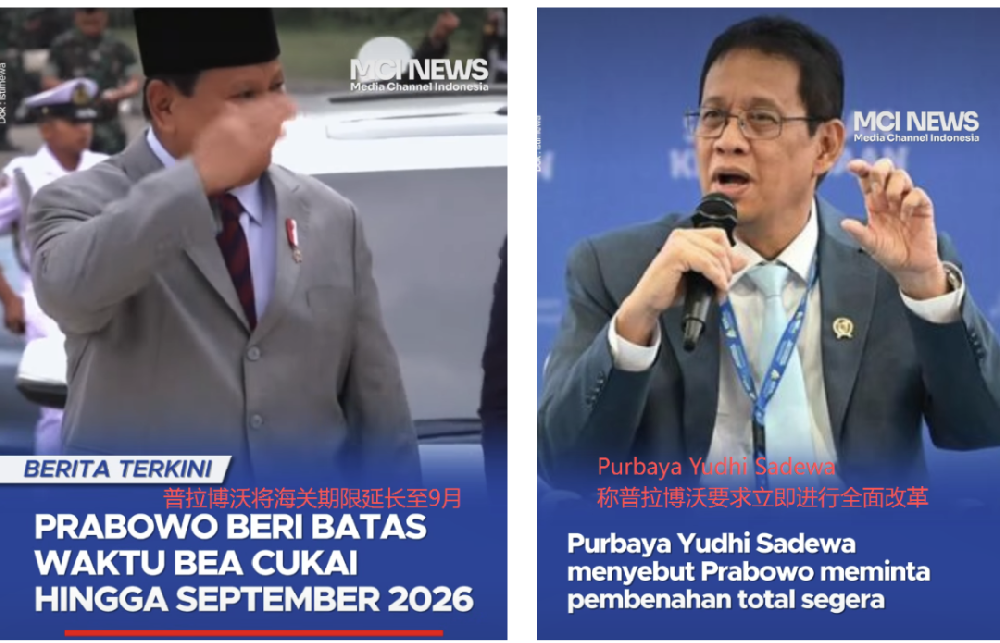
According to Indonesian media reports, on July 4, Indonesian Finance Minister Purbaya Yudhi Sadewa revealed a major development during a podcast interview: President Prabowo Subianto has given the Directorate General of Customs and Excise (DJBC) a final deadline of September 2026 to complete a major reform process.
If significant improvements are not achieved by then, the government may consider dissolving DJBC and replacing its functions with the Swiss inspection company SGS.
SGS: A Global Inspection Giant That Could Replace Customs Functions
The Swiss SGS Group (Société Générale de Surveillance) is headquartered in Geneva and was established in 1878. It is one of the world’s largest third-party inspection, verification, testing, and certification companies, with offices in more than 100 countries.
SGS has previously taken over pre-shipment inspection services for customs operations in several African countries.
President Prabowo also specifically referred to a precedent from Indonesia’s Suharto “New Order” era, when foreign inspection companies were involved in customs inspection activities.
Reform Before Dissolution: Government Gives Customs a Last Chance
According to Purbaya, President Prabowo originally intended to immediately dissolve the Customs and Excise Directorate.
However, Purbaya requested a transition period to allow internal reforms, explaining:
“The customs system involves tens of thousands of employees. You cannot simply dissolve it overnight. Thousands of people would immediately lose their jobs, and national import and export activities could be severely disrupted.”
During this period, Purbaya will conduct another comprehensive evaluation of:
Customs organizational structure;
Operational systems;
Internal management procedures.
He has also directly communicated the possibility of dissolution to senior customs and tax officials as a serious warning.
Customs Violations Still Under Investigation
Despite ongoing reforms, Purbaya stated that the evaluation process has continued to uncover various suspected violations within the customs system.
One major example occurred at Tanjung Priok Port.
On June 6, Purbaya conducted a surprise inspection at Indonesia’s largest port and discovered:
3,100 containers waiting for customs clearance.
At its peak, parliamentary data showed the backlog had reached nearly:
10,000 containers.
Following the inspection, he ordered:
24-hour operations;
Two-shift customs processing;
Accelerated clearance procedures.
By June 18:
The backlog had dropped from nearly 10,000 containers to around 1,500 containers.
However, Purbaya noted that the normal level should be approximately:
500 containers.
Impact on Chinese Exporters and Cross-Border Sellers
The possible restructuring of Indonesia Customs could bring significant changes to foreign trade operations, especially for Chinese exporters, cross-border e-commerce sellers, and logistics companies.
During this period, businesses should pay closer attention to:
Customs Compliance
Accurate HS code classification;
Complete import documentation;
Correct product valuation declarations;
Required certifications such as SNI and BPOM.
Customs Clearance Risk Management
Prepare alternative logistics channels;
Avoid relying on informal clearance methods;
Choose professional Indonesia dual-clearance (DDP/DDU) solutions.
Supply Chain Planning
Allow additional customs clearance buffer time;
Strengthen inventory planning;
Monitor Indonesian trade policy changes.